

.avif)
Rob is one of the CEOs at Funkit Interiors.
He also once delayed launching a property for nearly a year because he was determined to "do it himself."
Dozens of furniture tabs open at once. Backordered bar stools. Three returns on the same mirror. And somehow, no listing photos.
The property sat empty for months. No bookings. No revenue.
Today, it's finally live and on track to bring in $120,000 this year.
That's $120,000 he didn't make in 2024 because he kept second-guessing furniture choices instead of launching.
Yes, the irony is thick. One of the people who runs a design company tried to DIY his own property and lost a year of revenue doing it.
Even people who know better fall into this trap: "I'll do it myself for now. I'll upgrade later once it's making money."
It sounds reasonable. It's also how properties quietly lose their first year of revenue.
DIY Airbnb design takes longer than you think
DIY design takes forever.
You're making a thousand micro-decisions with no framework for knowing if they're right.
Should this couch face the window or the TV? Is this rug too small? Does this art work?
Every decision becomes a question. Every question eats time. Every month the property sits empty is revenue that never comes back.
Rob's delay? Decision paralysis. Cost: $120,000.
Speed matters more than most hosts realize
In short-term rentals, time is revenue.
Every extra month it takes to launch is a month the property sits empty. A year-long delay on a property earning $120k annually means $120k gone forever.
A professional team would've executed the work in 60-90 days. Rob spent a year on it because he had no system for making decisions quickly.
Strong design teams compress timelines. Decisions get made faster. Layouts get resolved early. Purchases happen with intention instead of panic.
Listings stall when no one makes the hard decisions early.
.avif)
What happens when you hire an Airbnb designer from day one
Kelly manages over 30 short-term rentals in the Smoky Mountains. When she bought her first investment property—a single-wide trailer on 1.75 acres—she hired Funkit immediately.
Orange refrigerator. Cowboy pool. Game barn. Every choice designed to stop scrolling and target families looking for an experience.
The property launched and got 14 bookings in the first two minutes. Now it's the top performer out of 30+ properties she manages.
First-year revenue: $73,000 with a 13.6% cash-on-cash return.
Kelly launched in under three months.
Common Airbnb design mistakes that hurt bookings
Hosts usually regret the visible stuff. The wrong couch. Art that felt off. A rug that looked too small.
The bigger problems happen earlier, before the furniture arrives.
Sleep counts don't match the target guest. Amenities sound good on paper but photograph like nothing. Layouts work on paper but feel awkward in person. Spaces sit empty because no one knew what to do with them.
These decisions shape performance before a single piece of decor shows up. And they cause the most delays when you're figuring them out alone.
Why redesigns cost more than getting it right the first time
Most hosts don't save money doing it themselves. They just pay twice.
They launch with a safe setup. Bookings trickle in below expectations. Photos feel flat. Something's off.
Six months later, they redesign. Furniture gets replaced. Walls get repainted. Layouts get reworked. The listing goes dark during construction.
That second round always costs more than doing it strategically the first time.
What professional designers actually do
Good designers clarify what matters, cut what doesn't, and turn vague ideas into something that works.
You still own the property. You still decide the direction. You just stop guessing.
Rob had a vision for his Austin property: "Colorful Beetlejuice. Bold, funky, abstract."
His own design team said no. "We're doing a pink house."
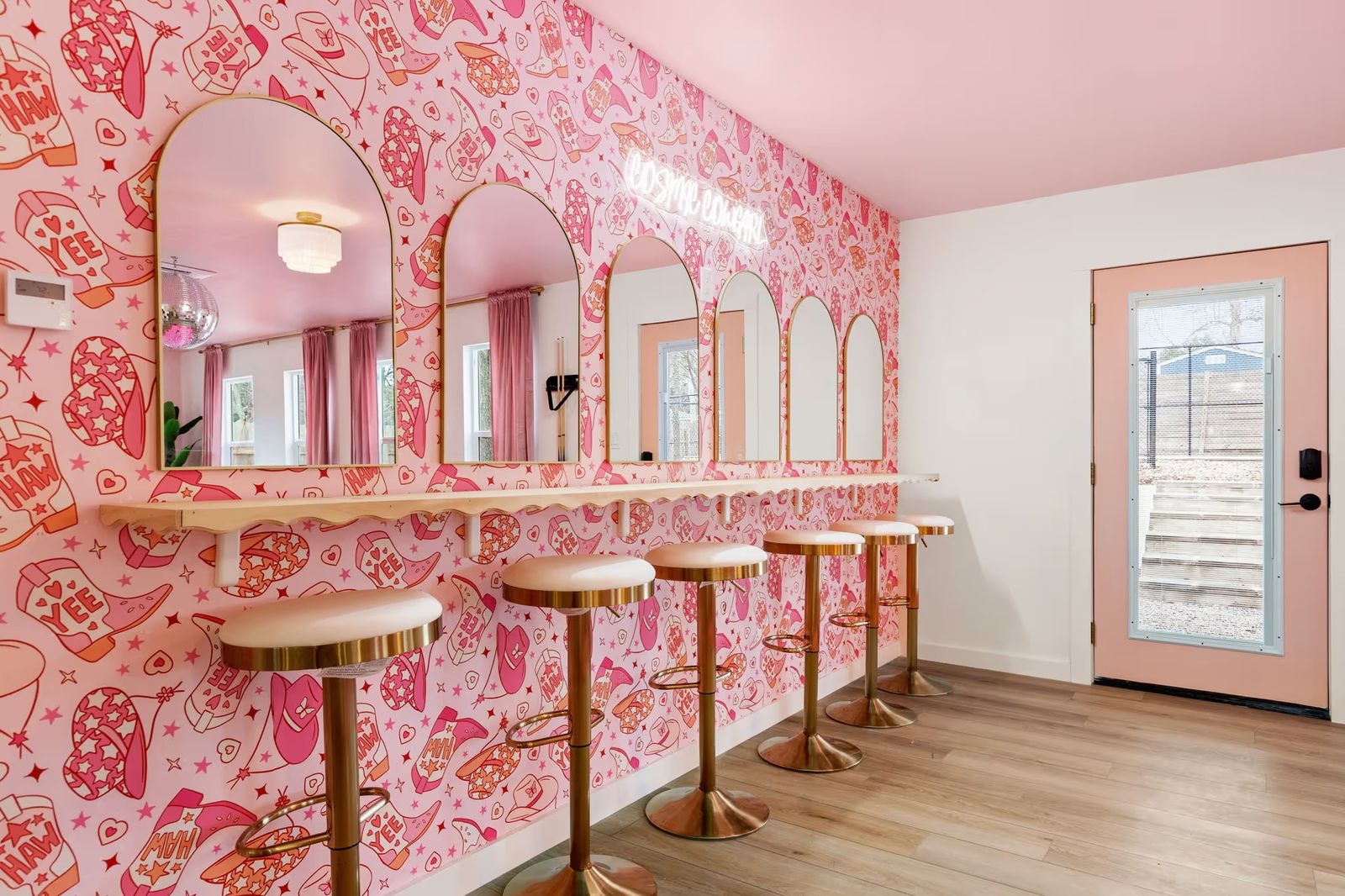
He let them run with it. The Pink Pickle launched as a bachelorette destination with a pink pickleball court, pink dinosaur, and Instagrammable moments everywhere.
Now it's one of the most talked-about properties in Austin, on track for $120,000 this year—the revenue he missed by delaying launch.
How long should it take to launch?
With a design team: 60-90 days from concept to launch.
Doing it yourself: 6 months to never, depending on how long you second-guess every decision.
Rob's year-long delay cost him $120,000. Kelly hired help and launched in under three months at the top of her market.
Final thought
If your property hasn't launched yet—or it's live but underperforming—the hard decisions haven't been made.
If your property is still sitting in decisions instead of bookings, that’s the problem to fix first.
Before you spend another month guessing, get a second set of eyes on what actually needs to happen to launch or turn performance around.
